Merlin guide
The Merlin Deck: A Guide to Doing 40 Damage and Feeling Nothing
By cyberbabyangel · 12 September 2026
Are you tired of go-wide decks that dribble out 1/1s like a leaky faucet? Bored of midrange piles that win by being slightly bigger than the other midrange pile? Do you, deep down, want to hit a barrier for 40 in a single turn and watch your opponent quietly close the client?
Well boy, do I have the deck for you. Enter Merlin.
Merlin is a spell combo deck. You spend the early game ramping, the midgame killing everything that moves, and then one turn where the math stops being fair. It's not the easiest deck in Origins to pilot, but it might be the most satisfying, and once you learn to count reveal order it plays a lot more like a puzzle than a card game. I'm into that. You might be too.
The Decklist
25 cards · stats from the live catalog
 ×2
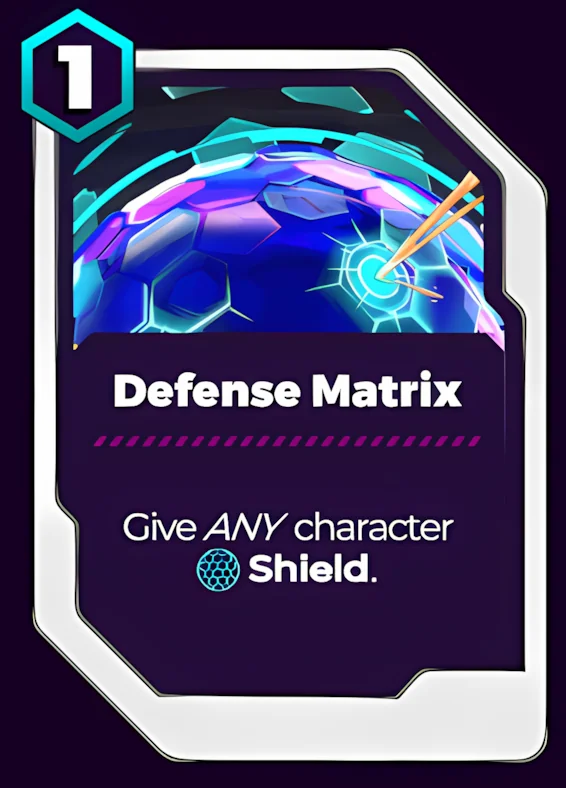
×2Defense Matrix
1 mana · Spell · Common · S2
Give ANY character Shield.
 ×2
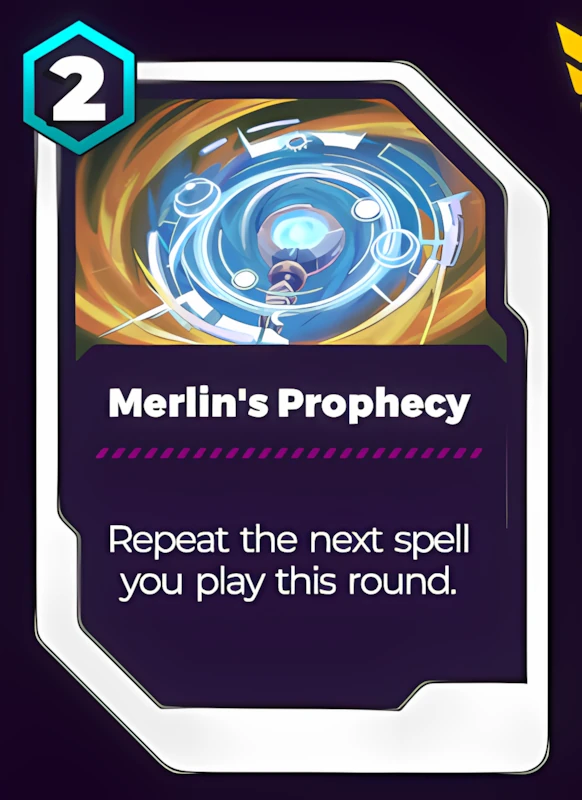
×2Merlin's Prophecy
1 mana · Spell · Common
Repeat the next spell you play this round.
 ×2
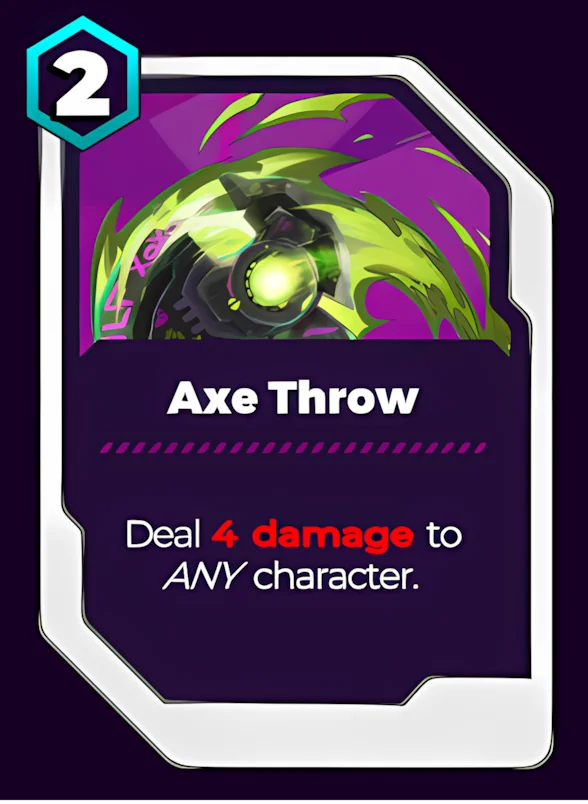
×2Axe Throw
2 mana · Spell · Common · S1
Deal 4 damage to ANY character.
 ×2
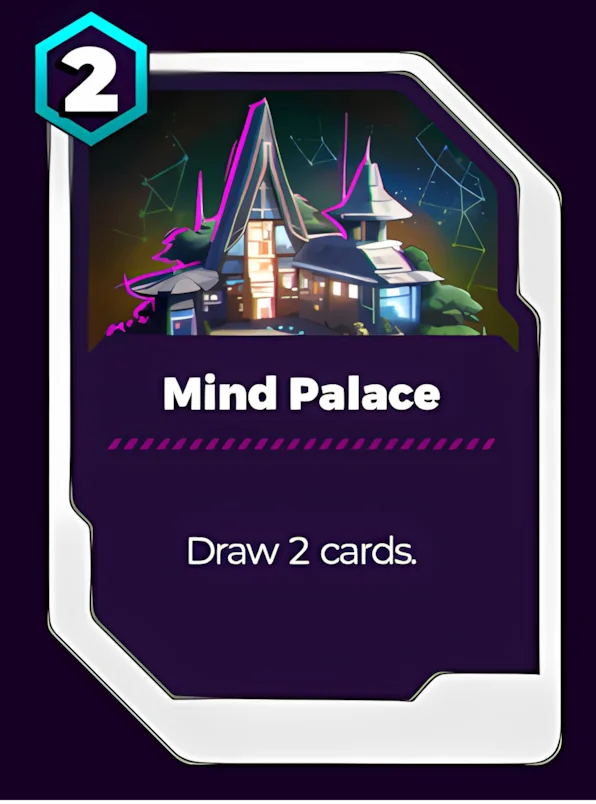
×2Mind Palace
2 mana · Spell · Common · S2
Draw 2 cards.
 ×2
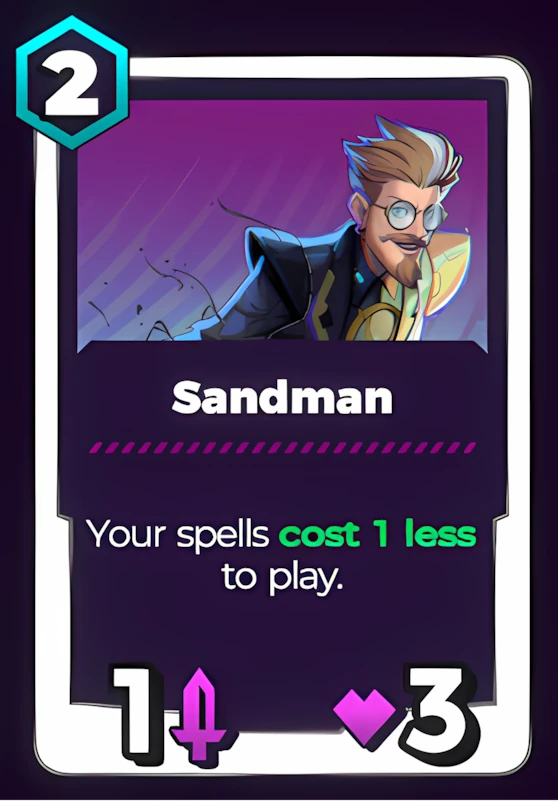
×2Sandman
2 mana · 3/2 · Character · Rare · S3
Your spells cost 1 less to play.
 ×2
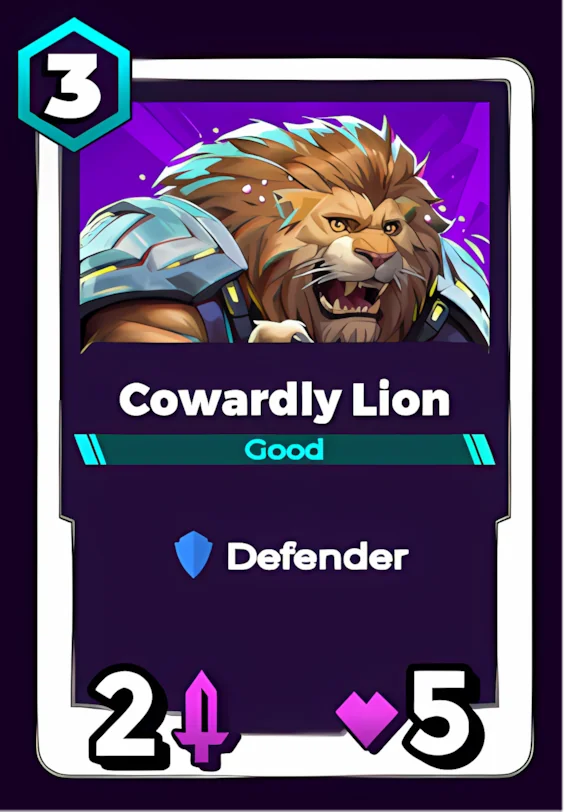
×2Cowardly Lion
3 mana · 2/5 · Character · Rare · S1 · Good
Defender
 ×2
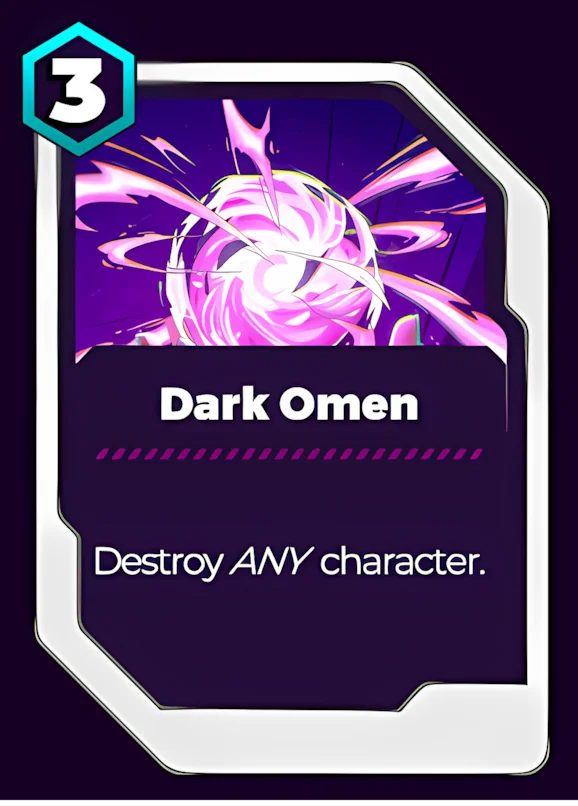
×2Dark Omen
3 mana · Spell · Rare · S1
Destroy ANY character.
 ×2
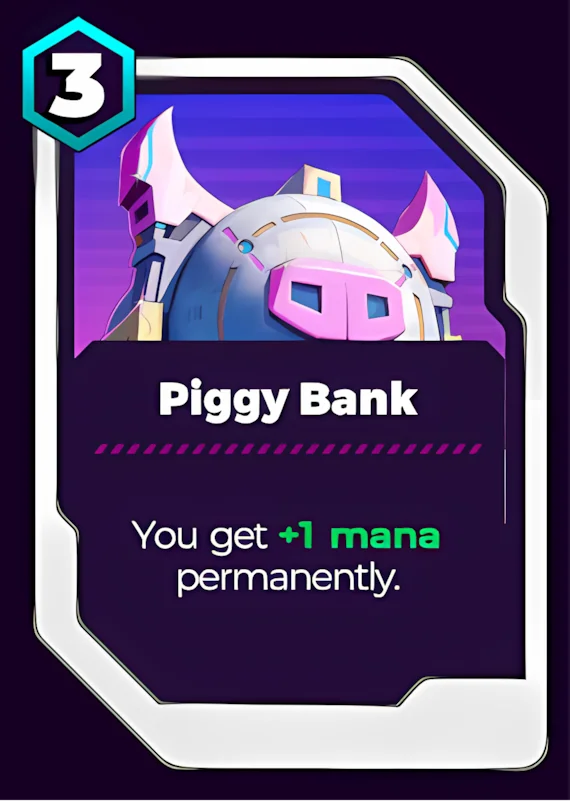
×2Piggy Bank
3 mana · Spell · Rare · S1
You get +1 mana permanently.
 ×2
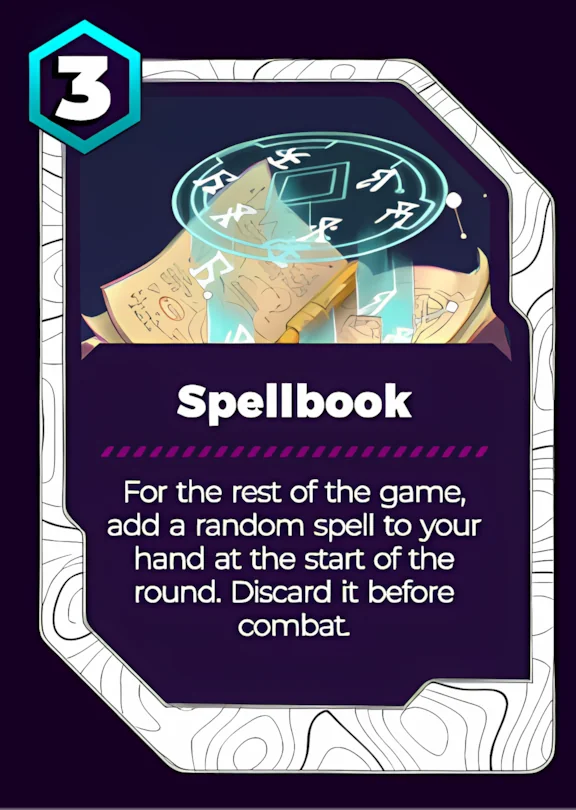
×2Spellbook
3 mana · Spell · Epic · S4
For the rest of the game, add a random spell to your hand at the start of the round. Discard it before combat.
 ×1
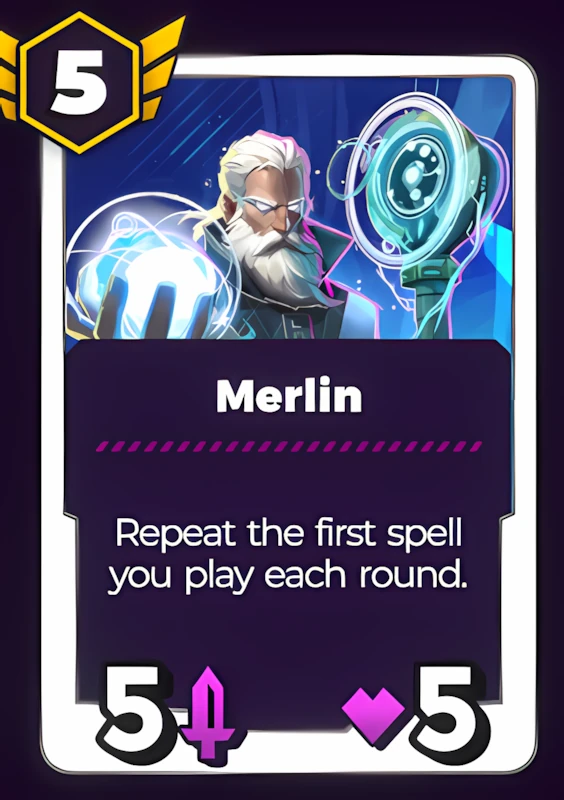
×1Merlin
5 mana · 3/5 · Character · Legendary · S4
Repeat the first spell you play each round.
 ×2
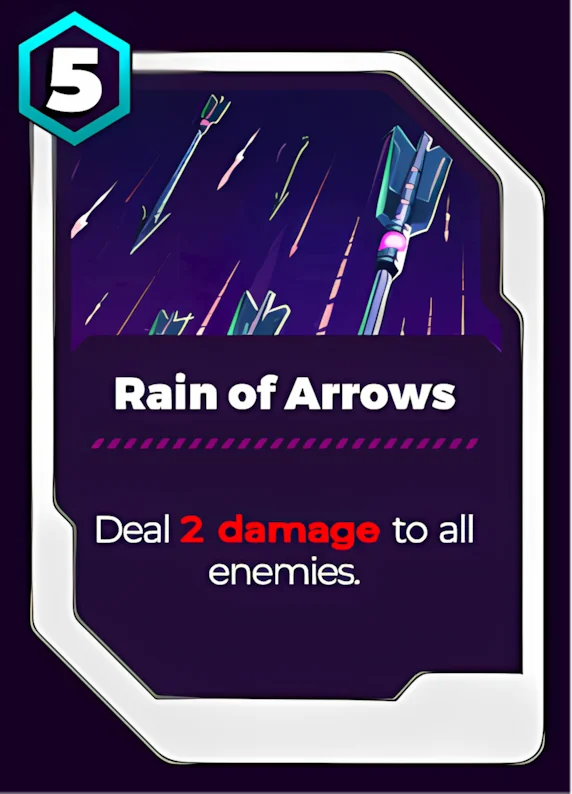
×2Rain of Arrows
5 mana · Spell · Rare · S4
Deal 2 damage to all enemies.
 ×2
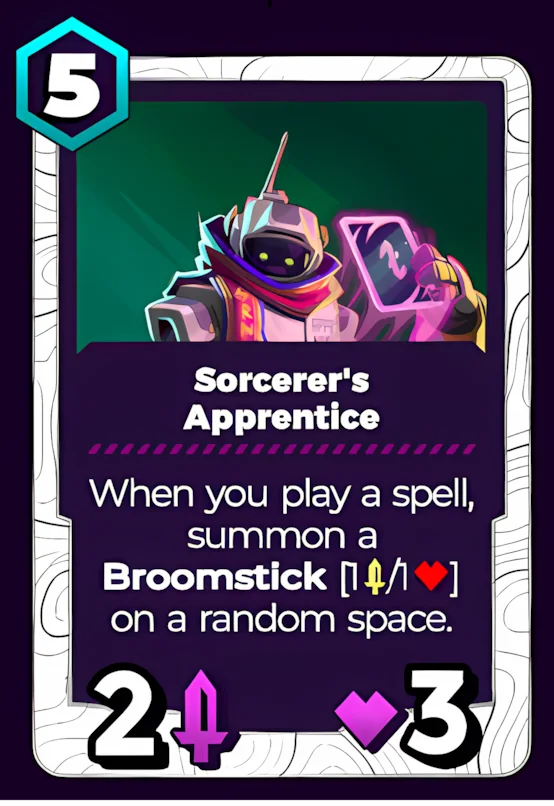
×2Sorcerer's Apprentice
5 mana · 2/3 · Character · Epic · S5
When you play a spell, summon a Broomstick [1Power/1Health] on a random space.
 ×2
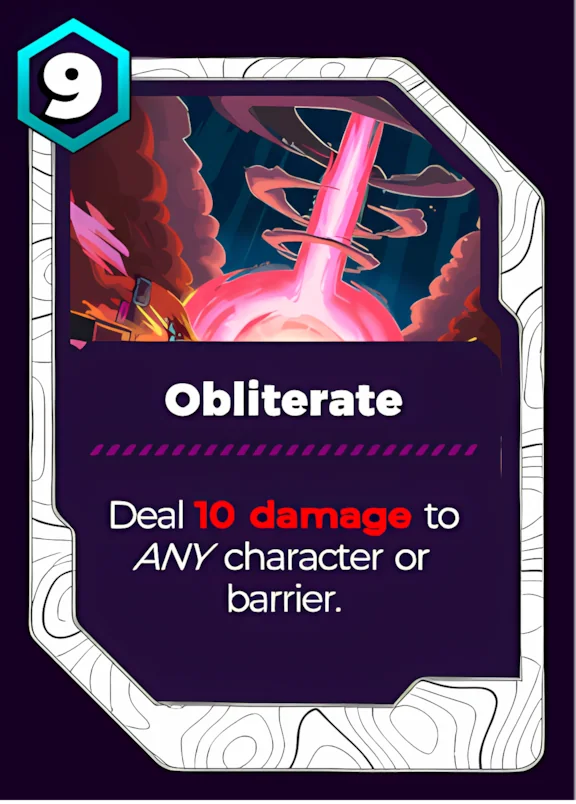
×2Obliterate
9 mana · Spell · Epic · S4
Deal 10 damage to ANY character or barrier.
Two copies of everything, one Merlin. 25 cards. Nine of the twelve non-legendary slots are spells, and the three minions that made the cut are all there to serve the spells. This is a deck with a point of view.
A Quick Rules Refresher (Skip If You've Played)
For the newer readers, here's what matters for this guide:
- Three lanes, each with a barrier at 20 health. Destroy two barriers and you win. A destroyed barrier comes back at 40, and yes, you can kill the same one twice.
- Each lane is also a location with a random effect. Locations reveal one per turn starting on turn 1, so lane 1 is known immediately, lane 2 on turn 2, lane 3 on turn 3.
- You start with 4 cards and 2 mana. Draw 1 and gain 1 mana each round, up to 10. Mana doesn't carry over.
- Reveal order alternates every turn. One player reveals and resolves everything first, then the other.
- Run out of deck and fatigue starts hitting all three barriers for increasing damage.
That last one matters more for Merlin than for most decks, and we'll get there.
The Game Plan in One Paragraph
Turn 1 or 2, land Sandman. Use the discount to double up on Piggy Bank with Merlin's Prophecy and jump ahead on mana. Spend the midgame trading spells for their minions and keeping your barriers healthy. When you have the mana and the reveal order lines up, drop Merlin, then next turn point a doubled Obliterate or Rain of Arrows at whatever you want gone. Repeat until they concede.
That's it. Everything below is detail.
Card by Card
Sandman (2 mana, 1/3)
Your spells cost 1 less to play.
The whole deck runs through this card. Every spell costs 1 less while he's alive, which means Prophecy costs 1, Axe Throw and Mind Palace cost 1, Piggy Bank and Dark Omen cost 2, and Obliterate drops to 8. Over a game that's easily 8 to 10 mana saved, on top of whatever Piggy Bank gives you.
The problem is that a 1/3 body does not survive contact with anything. Sandman needs babysitting, and half the decisions in this deck are really "how do I keep Sandman alive one more turn."
Merlin's Prophecy (2 mana)
Repeat the next spell you play this round.
Repeat the next spell you play this round. Two in the deck, plus Merlin hands you a third at game start, so you'll see this card a lot. Early it turns Piggy Bank into +2 mana for 5 total (or 4 with Sandman). Late it turns Obliterate into 20 damage. It's never a dead card, which is rare for a combo piece.
Piggy Bank (3 mana)
You get +1 mana permanently.
Ramp. Not exciting, but it is the reason you get to cast a 9 mana spell before turn 8. The ideal opening is Sandman, then Prophecy into Piggy Bank, which puts you two mana ahead of your opponent for the entire game. Play it whenever you have nothing more pressing to do with the mana. There's no such thing as too much mana in a deck with Obliterate.
Axe Throw (2 mana) and Dark Omen (3 mana)
Deal 4 damage to ANY character.
Destroy ANY character.
Your removal. Axe Throw deals 4, which kills most early minions and finishes off anything a Broomstick has chipped. Dark Omen just destroys the thing, no questions asked. Save Dark Omen for the card you actually can't handle any other way, and don't be precious with Axe Throw. Both are excellent Prophecy targets when you need two things dead right now.
Mind Palace (2 mana)
Draw 2 cards.
Draw 2. You're a spell deck that wants to see Sandman, Piggy Bank, Prophecy and Merlin, in roughly that order, and this is how you find them. One mana with Sandman out. Prophecy into Mind Palace is a fine play when you're flooding, and a great one with Merlin on board.
Defense Matrix (1 mana)
Give ANY character Shield.
Shield on any character. This is not a combat trick, it's a Sandman insurance policy. Sandman with Shield survives the Axe Throw that would otherwise end your ramp turn. It's also a fine way to keep Merlin alive through the one turn where your opponent gets to act first. Zero mana with Sandman out, which is genuinely absurd.
Cowardly Lion (3 mana, 2/5)
Defender
Defender. A big wall whose job is to stand in front of Sandman and absorb whatever your opponent throws at that lane. You're not playing this for the 2 power. You're playing it because it's the only card in the deck that says "attack me instead."
Sorcerer's Apprentice (5 mana, 2/3)
When you play a spell, summon a Broomstick [1Power/1Health] on a random space.
Every spell you play summons a 1/1 Broomstick on a random space. Here's the part the card doesn't tell you: Broomsticks read "When you play a spell, I get +1/+1." So the first spell makes a Broomstick, the second spell makes another and grows the first, the third makes a third and grows the other two. In a deck that casts three spells a turn, and doubles half of them, you end up with a board of 3/3s and 4/4s that arrived for free.
This matters more than it looks. A full lane of grown Broomsticks can take a barrier down on its own, which is why you rarely need the full 40 damage combo. The Apprentice is also a secondary target that pulls removal away from Sandman and Merlin. If your opponent spends Dark Omen on him, you've won a small victory.
Spellbook (3 mana)
For the rest of the game, add a random spell to your hand at the start of the round. Discard it before combat.
For the rest of the game, get a random spell at the start of each round, and discard it before combat if you didn't play it. This is your mid to late game card advantage engine, and the play you're looking for is Prophecy into Spellbook. Two Spellbooks means two random spells every turn for the rest of the game, none of which come from your deck, so fatigue stops being a concern and your hand refills itself.
The random pool includes legendary spells. Legion of the Dead (7 mana, fill your board with 2/2 Zombies) has saved more than one game that was otherwise lost, and every random spell you cast is another Broomstick and another buff. Play Spellbook early if you can afford to, because the value compounds, and double it the moment you have a spare Prophecy.
Rain of Arrows (5 mana)
Deal 2 damage to all enemies.
2 damage to all enemies. On its own, fine. Doubled by Prophecy or Merlin, it's a 4 damage board wipe that clears everything the average go-wide deck can put down. This is the card you're saving for when your opponent overcommits, and it's the reason the midgame is winnable even when you're behind on board.
Merlin (5 mana, 5/5, Legendary)
Repeat the first spell you play each round. Legendary Power: Game Start: Add a Merlin's Prophecy to your hand.
Repeats the first spell you play each round, every round, forever, as long as he's alive. He also gives you a free Prophecy at game start, which is why you'll mulligan aggressively for the pieces that pair with it.
A 5/5 body is not nothing, but he's not here to fight. He's here to sit in the back and turn every spell into two spells. Once Merlin is online and protected, your opponent is playing against a deck with double the removal, double the ramp and double the reach. Most decks can't handle that.
Obliterate (9 mana)
Deal 10 damage to ANY character or barrier.
10 damage to any character or barrier. Alone, it's a half a barrier. With Merlin repeating it, it's a full one. With Merlin repeating a Prophecy first, and then that Prophecy pair repeating Obliterate, it's 40 damage, which is one regenerated barrier in a single turn. This is the "feel nothing" part of the title.
Mulligans
You want Sandman above all else. After that, Piggy Bank, then Prophecy (remember Merlin gives you one for free, so a second in hand is a luxury, not a requirement). Mind Palace is a fine keep as a fourth card.
Throw back Obliterate and Rain of Arrows every time. Throw back Sorcerer's Apprentice unless the rest of the hand is already perfect. Cowardly Lion is a keep if you already have Sandman and want a bodyguard, and a throw if you don't.
The dream opening hand is Sandman, Piggy Bank, Prophecy, and a spare removal spell or Mind Palace. You won't see it often. Sandman plus any two of the ramp pieces is still excellent.
Where to Play Sandman (and Why It's Lane 3)
Here's a thing new Merlin players get wrong constantly. Locations reveal one per turn. On turn 1 you know what lane 1 does. You don't know lanes 2 or 3 yet.
Sandman is the most important card in your deck, and some location effects will ruin him. Anti-Magic Vault is the obvious one, but anything that punishes spells, shrinks minions or shuffles the board is a problem. If you drop Sandman into lane 2 on turn 1 and lane 2 flips Anti-Magic Vault on turn 2, you've lost your engine to a coin flip.
So we play him to lane 3. Yes, lane 3 is also unrevealed. But lane 3 reveals on turn 3, which is one turn later than lane 2, and every turn Sandman survives is a turn of discounted spells. You're not eliminating the risk, you're delaying it, and delay is worth a lot when the card in question is your whole gameplan.
The exception is when lane 1 has already revealed as something Sandman loves. If lane 1 is a location that protects your minions or buffs spells, put him there and stop overthinking it.
Reveal Order: The Part That Actually Wins Games
Origins has a quirk that most new players treat as background noise: reveal order alternates every turn. Merlin players treat it as the whole game.
Whoever reveals first gets to resolve all of their cards before the other player does anything. That means on the turns you reveal first, your removal lands before their minion attacks, your Shield goes up before their Axe Throw comes down, and your Merlin repeats a spell before anyone can touch him.
Merlin's payoff comes the turn after you play him. If you play Merlin on a turn where you reveal first, then next turn you reveal second, and your opponent gets a full turn to Dark Omen him before he's ever repeated a single spell. That's 5 mana for nothing.
So you do the opposite. Play Merlin on a turn where you reveal second. He comes down after your opponent has already spent their removal for the turn. Next turn you flip to revealing first, you play Prophecy, Merlin repeats it, and the combo resolves before your opponent has a window to respond.
Since reveal order alternates and you know who goes first on turn 1, you know your entire schedule for the game from the start. Work backwards. If you want to combo on turn 8, Merlin goes down on turn 7, so turn 7 needs to be a reveal-second turn for you. If it isn't, either combo a turn earlier or later, or accept the risk and hold Defense Matrix.
This applies to Sandman too, by the way. Sandman on a reveal-second turn is a Sandman your opponent didn't get to respond to before he started discounting spells.
The Midgame
Between the ramp turns and the combo turn, your job is simple and a bit boring: don't die, and don't let Sandman die.
Trade spells for minions one for one. Axe Throw the 3-health things, Dark Omen the big things, and don't bother with the small things unless they're threatening a barrier you care about. Every enemy minion you kill is damage your barriers don't take, and your barriers are your clock. You don't have a way to heal, so 20 health per barrier is all you get until one of them dies and comes back at 40.
If your opponent goes wide, hold Rain of Arrows and let them overextend into it. A doubled Rain (Prophecy, or Merlin later) kills the entire board of most aggro decks and swings the game on its own. This is usually the point where they realise what deck they're playing against.
Get Spellbook down when you have a spare turn, and double it with Prophecy if you can. Get Sorcerer's Apprentice down when you have a spare 5 mana and something to protect him with. From that point on, every spell you cast is also a body and a buff, and a couple of spell-heavy turns will leave you with a lane of Broomsticks that can carry a barrier by themselves. Against decks that can't wipe your board, this is often how you actually win, with Obliterate cleaning up the second barrier.
Play Piggy Bank whenever you have leftover mana. Every one you resolve makes the combo turn arrive sooner.
The Combo Turn
Let's get the 40 damage version out of the way first, because it's the one in the title. Merlin on board, alive, on a turn where you reveal first:
- Play Merlin's Prophecy. Merlin repeats the first spell you play each round, so you now have two "repeat the next spell" effects pending.
- Play Obliterate. Both Prophecies repeat it, and Merlin's own repeat is already spent on the Prophecy, so you get four Obliterates. 40 damage.
With Sandman out that's 1 mana for Prophecy and 8 for Obliterate, 9 total. You'll need this exactly once per game at most: when a barrier has already died and come back at 40, and you want it gone again in one turn.
The honest truth is you rarely need it. Base barriers are 20, and Merlin plus a single Obliterate is 20 on its own, no Prophecy required. That's your bread and butter finisher, and it leaves the Prophecy free for Spellbook or Rain of Arrows. Even better, if you've had Sorcerer's Apprentice out through a few spell-heavy turns, your Broomsticks have probably grown into a board that's chipping barriers by itself. A lot of games end with Broomsticks doing the last 10 and Obliterate doing the first 10, and that's fine. Nobody's checking whether you won with style.
Point Obliterate at their Legendary and it's gone with damage to spare, which you can't redirect, so unless that Legendary is about to win the game, aim at the barrier.
The other combo is the cheap one. Prophecy into Rain of Arrows with Merlin on board is three Rains for 5 mana with Sandman, or 6 damage to every enemy. Nothing in the format survives that, and if the Apprentice is out, you just made three Broomsticks and grew them all.
Playing Around Things
Your opponent knows what Sandman does, and any competent one is going to try to kill him. Keep Defense Matrix in hand from about turn 3 onward if you can, and don't play Sandman into a lane where you already know a burn effect is coming. Cowardly Lion in the same lane buys a turn against attackers, but does nothing against spells, so don't treat him as a full answer.
Merlin gets the same treatment, only more so. Never play him on a reveal-first turn without Defense Matrix backup. Ideally never play him on a reveal-first turn at all.
Fatigue is the quiet loss condition. Between Mind Palace and a 25 card deck, you can run yourself out around turn 12 or 13 in a long game. Spellbook slows this down, Merlin doubling Mind Palace speeds it up. If the game is going long, stop doubling your draw spells and start doubling your damage instead.
Location effects that tax or punish spells are your worst enemy. Anti-Magic Vault in the wrong lane can flip a matchup. Read every location as it reveals and be willing to move your gameplan to a different lane.
Matchups
[cyberbabyangel: fill in the archetypes you actually see. Rough shape below.]
Go-wide aggro. Favored. Hold Rain of Arrows, trade cheap removal for their 2 and 3 drops, and let them run into a doubled Rain. The risk is that they kill Sandman early and outpace your ramp, so protect him and don't be shy about Cowardly Lion.
Midrange. Even to slightly favored. Their threats are bigger, so Dark Omen matters more and Axe Throw less. You win this one by being ahead on mana and forcing them to answer Merlin on a turn where they can't.
Control and other combo decks. Depends on how much removal they run. If they can kill Merlin every time he lands, you need to bait removal with Sorcerer's Apprentice and Cowardly Lion first. Spellbook is at its best here, because long games are where the extra card every turn matters.
Flex Slots
The list above is the one I play, but there's one swap with real merit: Bullseye (1 mana, deal 3 damage to any character) in place of Axe Throw.
The case for Bullseye is cost. With Sandman out it's free, which means it's a free Broomstick, a free Broomstick buff, and a removal spell you can cast on turn 1 without giving anything up. The case for Axe Throw is that 4 damage kills things 3 damage doesn't, and there are a lot of 4 health minions in the format. If your local meta is full of 3 health bodies, run Bullseye. If it's midrange with bigger creatures, stick with Axe Throw. I go back and forth.
Common Mistakes
- Playing Sandman into lane 2 on turn 1. Lane 3. Every time, unless lane 1 is already revealed as friendly.
- Playing Merlin on a reveal-first turn. He'll die before he does anything.
- Spending Prophecy on Obliterate when Merlin alone already does the 20 you needed. Save it for Spellbook.
- Spending Dark Omen on something Axe Throw would have killed.
- Forgetting the free Prophecy from Merlin's legendary power exists, and mulliganing for a second one you didn't need.
- Doubling Mind Palace late in a long game and fatiguing yourself out of it.
Closing
Merlin isn't the deck you play if you want to turn your brain off and attack. It rewards counting, patience, and knowing exactly which turn is yours. In exchange, it gives you the single most satisfying turn in Origins: Prophecy, Obliterate, barrier gone, opponent staring.
Go count some reveal orders.